Chelmsford flat blocks
What gets checked on a fire door
Send an enquiry about the doors in your block and find out what a specialist will look at. There is no charge for asking, and no obligation to book anything until you are ready.
What gets checked on a fire door across Chelmsford flats
Find out what a specialist looks at during a quarterly fire door inspection of flats, why each part matters, and what the final report will tell you about your home.
Why knowing what gets checked on a fire door matters
A fire door holds back smoke and flame long enough for people to leave a burning building. Knowing what gets checked on a fire door helps you understand why a specialist spends time on every hinge, seal and gap.
In Chelmsford, blocks of flats follow a set pattern. Communal doors along escape routes face constant use from residents, post carriers and bin collectors. That wear means they need a check every three months. The front door of each individual flat is used less often by strangers, so it is inspected once a year. This split schedule keeps the shared corridors safe without demanding constant access inside private homes.
The Fire Safety England Regulations 2022 made these intervals a legal requirement for buildings over eleven metres tall. Many managing agents across Chelmsford now apply the same routine to lower blocks as well, since the risk of smoke spreading through a faulty door does not depend on the height of the building.
Gaps, hinges and the frame around the door
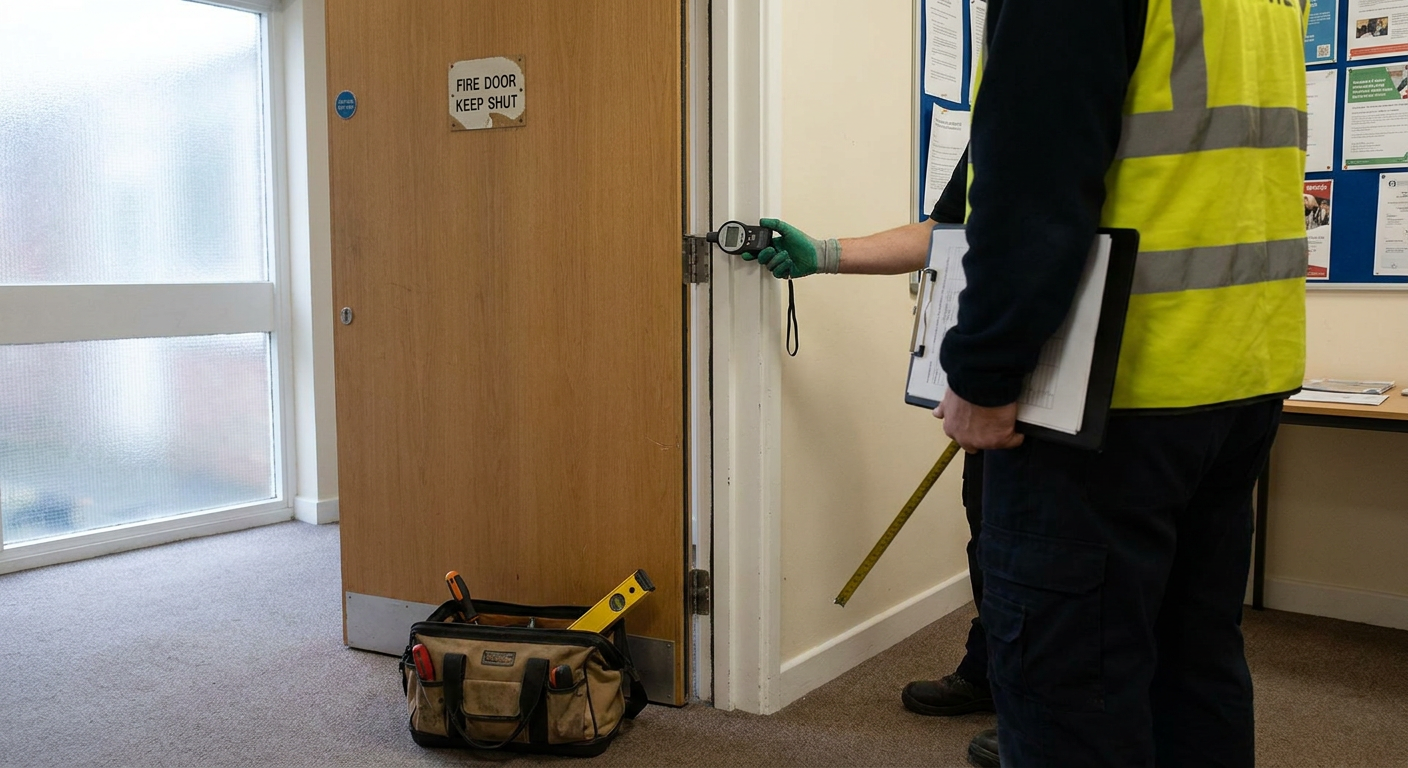
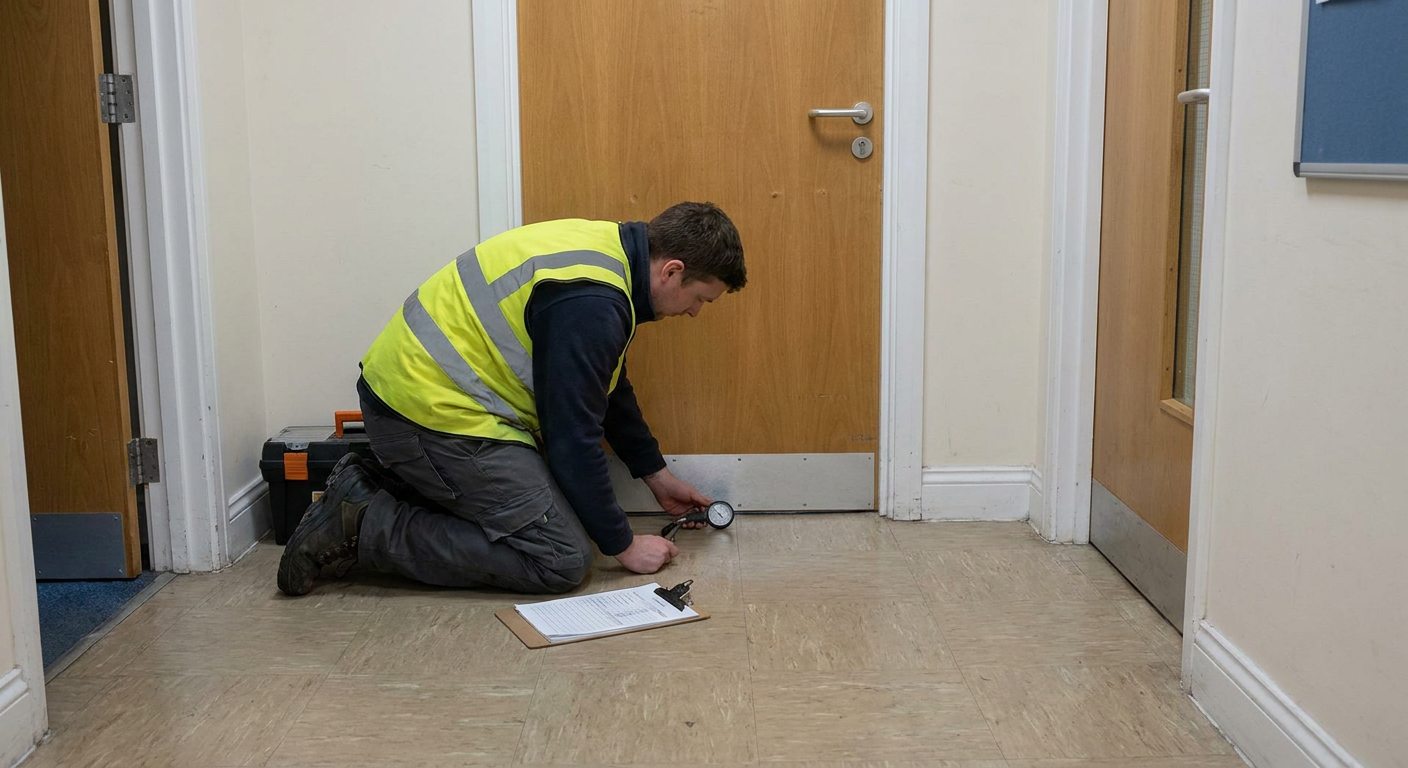
The inspector measures the space between the door leaf and the frame on all four sides. The fire door gap tolerance allows a maximum of three millimetres along the top and both sides. At the bottom, eight millimetres is usually the limit, though some manufacturers specify less. A gap wider than that lets smoke pass through before the heat even reaches the door.
Hinges must be fixed with the correct screws. Missing screws or hinges that have pulled away from the timber mean the door will drop and bind against the frame. The inspector checks that every hinge carries the CE mark or UKCA mark required for fire doors, and that none are bent or loose.
The frame itself is part of the assembly. Splits in the wood, deep scratches or signs of rot weaken its ability to hold the door in place under heat. Any damage here is recorded in the report alongside the condition of the leaf.
Closers, seals and intumescent strip replacement
Every fire door needs a working closer. During a fire door closer check, the specialist opens the door fully and watches it shut. It must latch firmly into the frame without being pushed. If it slams, swings too slowly, or stops short of the latch, the closer needs adjusting or replacing. The arm is also checked for bends, and the fixing screws are tested for tightness.
Intumescent strips sit in grooves around the door or frame. They expand when heated to seal the gap against fire. Smoke seals, usually brush or blade types, stop cold smoke from drifting through. Both wear down over time. Intumescent strip replacement is straightforward because a specialist can press new strips into the existing grooves without removing the door from its hinges.
If the strips are painted over, missing chunks, or peeling away from the groove, they will not perform in a fire. The inspector notes exactly which doors need new seals and specifies the type required.
Glass, signage and the overall condition
The inspector looks for a small etched mark in the corner of the pane, such as BS 476 or EN 1364, which shows it was manufactured to withstand heat. Standard window glass shatters within minutes and leaves a hole for smoke to pour through. Signage is another detail. Doors along communal corridors should carry blue circular signs reading Fire Door Keep Shut. If these are missing, scratched over, or replaced with handwritten notes, the inspector flags them. General damage matters too. The specialist records each fault so the report shows exactly where the problem sits on the door.
Access, timing and what happens after a failed door
For the annual check on flat entrance doors, the inspector needs brief access inside each home. Residents receive notice so someone can open up, let the specialist examine the door from both sides, and lock up again. In a Chelmsford block of twenty flats, a door by door inspection usually takes half a day. When a door fails, repair is often possible. A failed fire door repair or replace decision depends on the fault. New seals, adjusted closers and fresh screws cost little. The final report lists every door, states whether it passed or failed, and sets out the work needed. Managing agents and landlords read it to plan repairs. Essex Fire and Rescue Service can ask to see it during an audit, so keeping it on file is a legal duty.
Questions about fire door checks in Chelmsford flats
- Maximum gap around a fire door
- The fire door gap tolerance is three millimetres on the top and sides. The bottom allows up to eight millimetres. Wider gaps fail the check.
- Quarterly versus annual checks
- A quarterly fire door inspection covers communal doors because heavy daily traffic wears them faster. Flat entrance doors are checked annually since fewer people handle them.
- Access inside Chelmsford flats
- Yes. The specialist needs to see both faces of each flat entrance door. Residents receive advance notice so the annual check causes minimal disruption.
- Checking the door closer
- During a fire door closer check, the specialist opens the door fully and watches it latch without help. Sticking, slamming or stopping short means adjustment is needed.
- Replacing seals without a new door
- Intumescent strip replacement involves pressing new strips into the existing grooves. The door stays on its hinges while the specialist fits the new seals.
- Repairing a failed fire door
- A failed fire door repair or replace decision depends on the damage. Adjusted hinges or new seals are simple fixes, but a warped core requires a full replacement.
Ask about a fire door inspection for your home
Send details about your block and a specialist firm will reply with what they can do. Asking costs nothing and does not commit you to booking any work.
- No obligation to proceed
- Local Chelmsford specialists
- Clear written reports