HMO licensing
HMO licence fire safety conditions in Chelmsford
Send the details of your shared house to find out what the council expects. There is no fee for an initial enquiry and no obligation to book any work.
What the council asks for when you apply
Fire safety conditions on a new HMO licence
When you apply for an HMO licence in Chelmsford, the council attaches specific fire safety conditions before granting it. These hmo licence fire safety conditions set out exactly what must be in place for tenants to escape safely if a fire starts. They cover alarms, emergency lighting, escape routes and the doors that protect them.
The requirements depend on the size of the house and how many people live there. A three-storey shared house will carry stricter rules than a two-storey one. The council uses national guidance but applies its own standards locally, so hmo licence requirements in Chelmsford can differ from those in another district. A specialist firm carries out a [fire risk assessment](/safety-work/fire-risk-assessment-chelmsford) to identify what the building needs and produces a written report the landlord can submit as evidence.
Evidence the council wants to see
Chelmsford City Council asks for proof that alarms and emergency lighting are installed correctly and maintained. For alarms, this means a certificate showing the system meets the relevant British Standard, along with records of regular testing. Emergency lighting requires similar paperwork: installation certificates and test logs showing the batteries hold their charge.
This hmo fire risk assessment evidence usually comes from the specialist who inspects the property. They check each detector, sounder and light fitting, then record the findings in a format the licensing officer accepts. Landlords should keep these documents together, because the council can ask to see them at any point during the licence period. Guidance on [who the responsible person is](/answers/who-is-the-responsible-person-chelmsford) clarifies whose job it is to hold and produce these records.
Timing the assessment around your application
A written fire risk assessment is needed before the licence application goes in. The council will not process the form without seeing that the building has been checked by a competent person. Waiting until after submission delays the whole process and risks running the existing licence down.
Booking early matters. Once the specialist firm is instructed, they arrange a visit to the house, inspect every room and common area, and write up the findings. Turnaround times vary, but landlords should allow several weeks between booking and receiving the finished document. Details on [how to book an assessment](/answers/booking-a-fire-risk-assessment-chelmsford) explain what information to have ready so the visit happens without delay.
Renewing a licence and changing conditions
Licence renewal brings a fresh look at the building. Fire conditions do change between licence periods because regulations tighten and the council updates its expectations. What satisfied the licensing officer five years ago might not be enough now.
During a renewal, pay close attention to licence renewal fire door requirements. Older doors that were accepted under a previous licence may now need upgrading or replacing. The specialist firm reviews the current conditions against what is actually fitted in the house and flags anything that falls short. A [compartmentation survey](/safety-work/compartmentation-survey-chelmsford) checks whether walls, floors and ceilings still form a continuous barrier, since alterations over the years often create hidden gaps.
Fire doors in a shared house
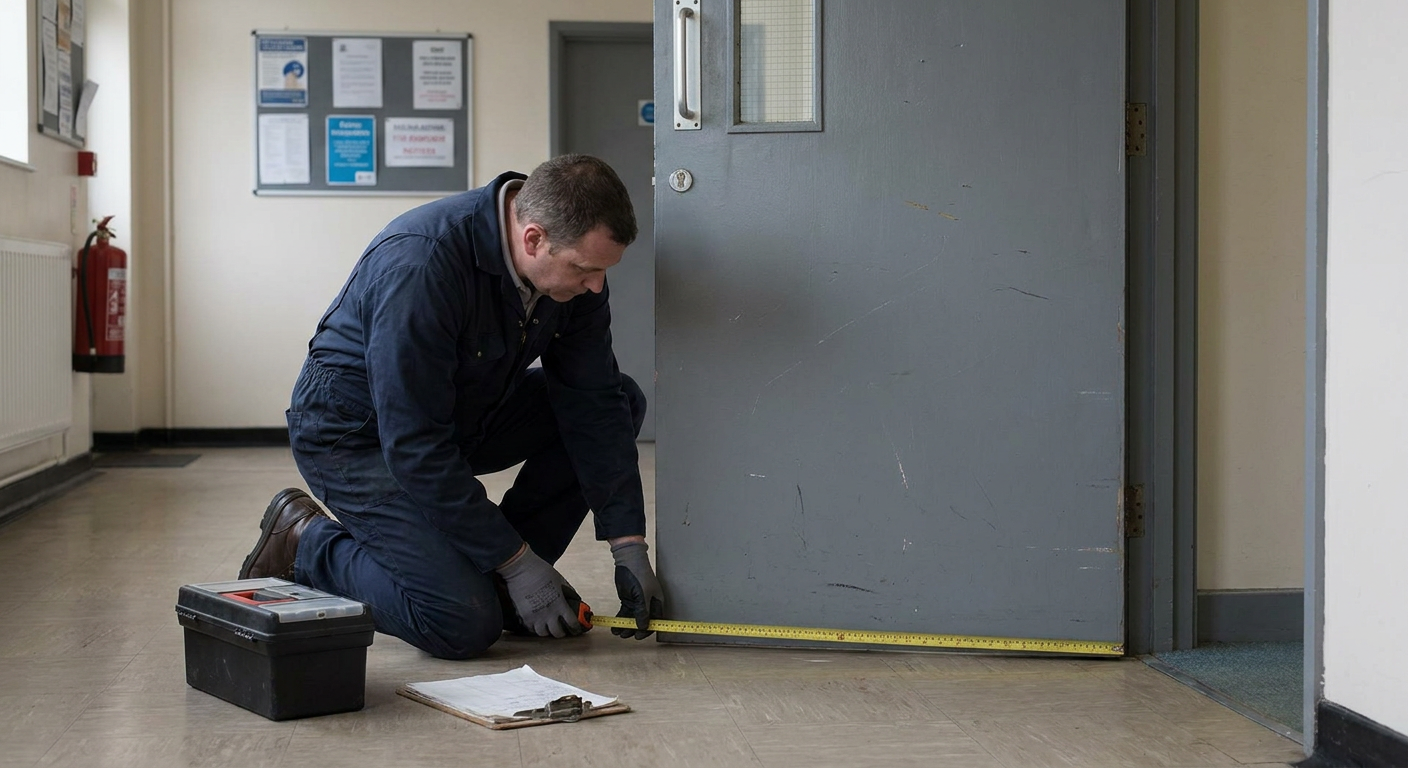
Council fire conditions for a shared house almost always require fire doors on bedrooms. These doors hold back smoke and flames long enough for people to reach the stairs and get out. The specification includes intumescent seals, cold smoke strips and self-closing devices that shut the door fully every time.
The council will want fire doors fitted to every bedroom, plus any room that opens onto the escape route, such as a kitchen or lounge. A [fire door inspection](/safety-work/fire-door-inspection-chelmsford) identifies which doors already meet the standard and which need work. Understanding [what gets checked on a fire door](/answers/fire-door-checks-explained) helps landlords see why a door that looks solid might still fail.
What happens if the house does not meet conditions
If an inspection finds the house does not meet the licence conditions, the council sets a deadline for the work. Missing that deadline can lead to enforcement action, including fines or revocation of the licence. Knowing what to expect during a Chelmsford HMO inspection means having the paperwork ready and the physical measures in place before the officer arrives.
Budgeting for fire works depends entirely on the building. A house that already has a good alarm system and compliant doors will cost less to bring up to standard than one starting from scratch. The specialist firm provides a clear report setting out what is required, so landlords can price the work accurately. Where multiple properties are involved across nearby villages, firms operating in [Writtle](/chelmsford-and-villages/writtle), [Boreham](/chelmsford-and-villages/boreham) or [Danbury](/chelmsford-and-villages/danbury) follow the same process.
Common questions from HMO landlords
-
Answers to the things landlords ask most often when preparing a shared house for licensing in Chelmsford.
- Written assessment timing
- The council needs the completed report before it processes the licence application. Arrange the visit well ahead of your deadline.
- Alarm and lighting proof
- Installation certificates and maintenance logs for both systems must accompany the application as evidence.
- Bedroom fire doors
- Every bedroom opening onto the escape route needs a fire door with working seals and a self-closer. A specialist inspects each one to confirm it closes fully against the frame.
- Cost of fire works
- The budget depends on the building. The assessment report lists exactly what needs doing so costs can be priced.
- Changes at renewal
- Conditions tighten over time. Doors and alarms accepted under an old licence may need upgrading for the new one.
- Failing an inspection
- The council issues a deadline to fix faults. Missing it risks fines or losing the licence entirely.
Find out what your HMO needs for licensing
Send the details of your shared house. The enquiry goes to a specialist firm who can assess the building and produce the report the council requires. There is no obligation to proceed.
- No fee to enquire
- Clear written report
- Local to Chelmsford