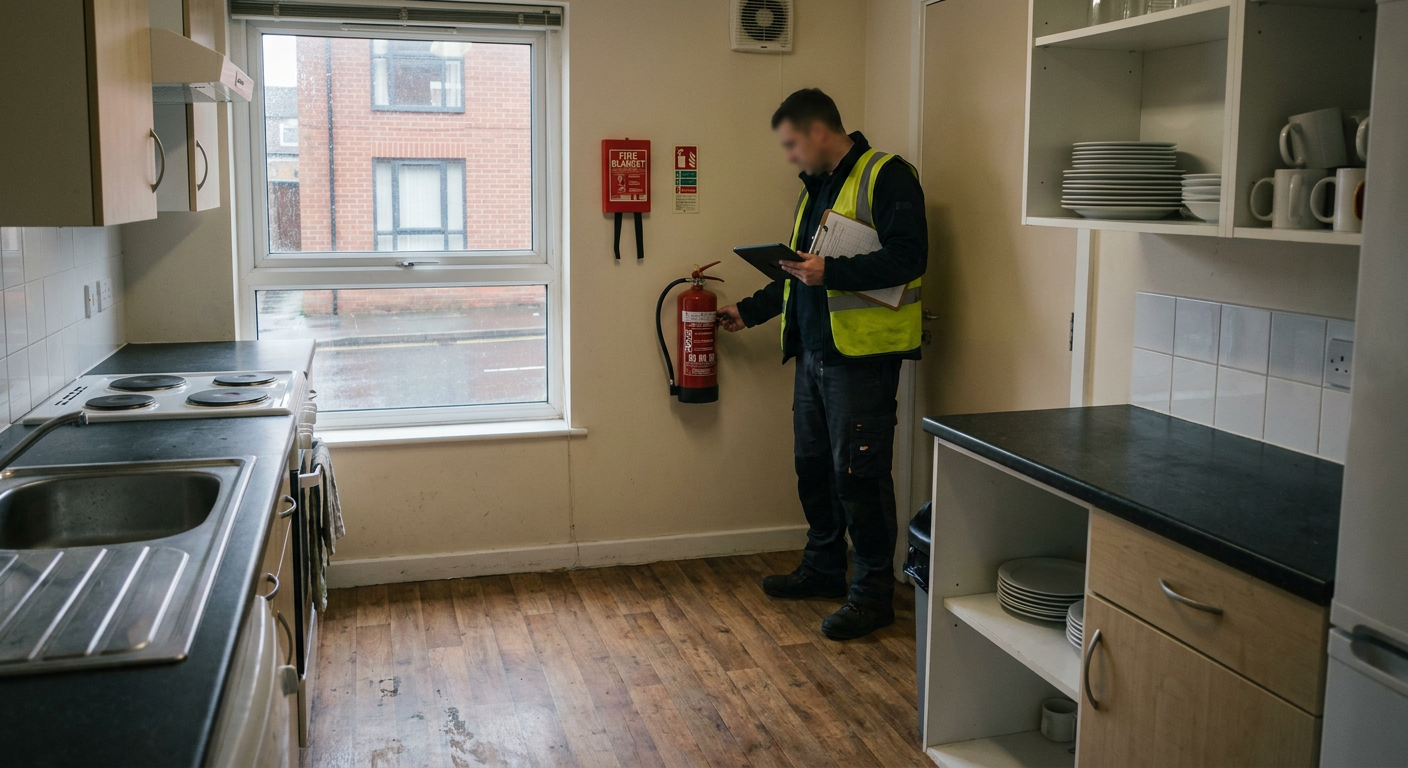
Care homes in Chelmsford
Care home fire risk assessment in Chelmsford
Send an enquiry about your care home and a specialist firm will reply with what they can do. There is no charge for asking, and no obligation to book anything once you have the details.
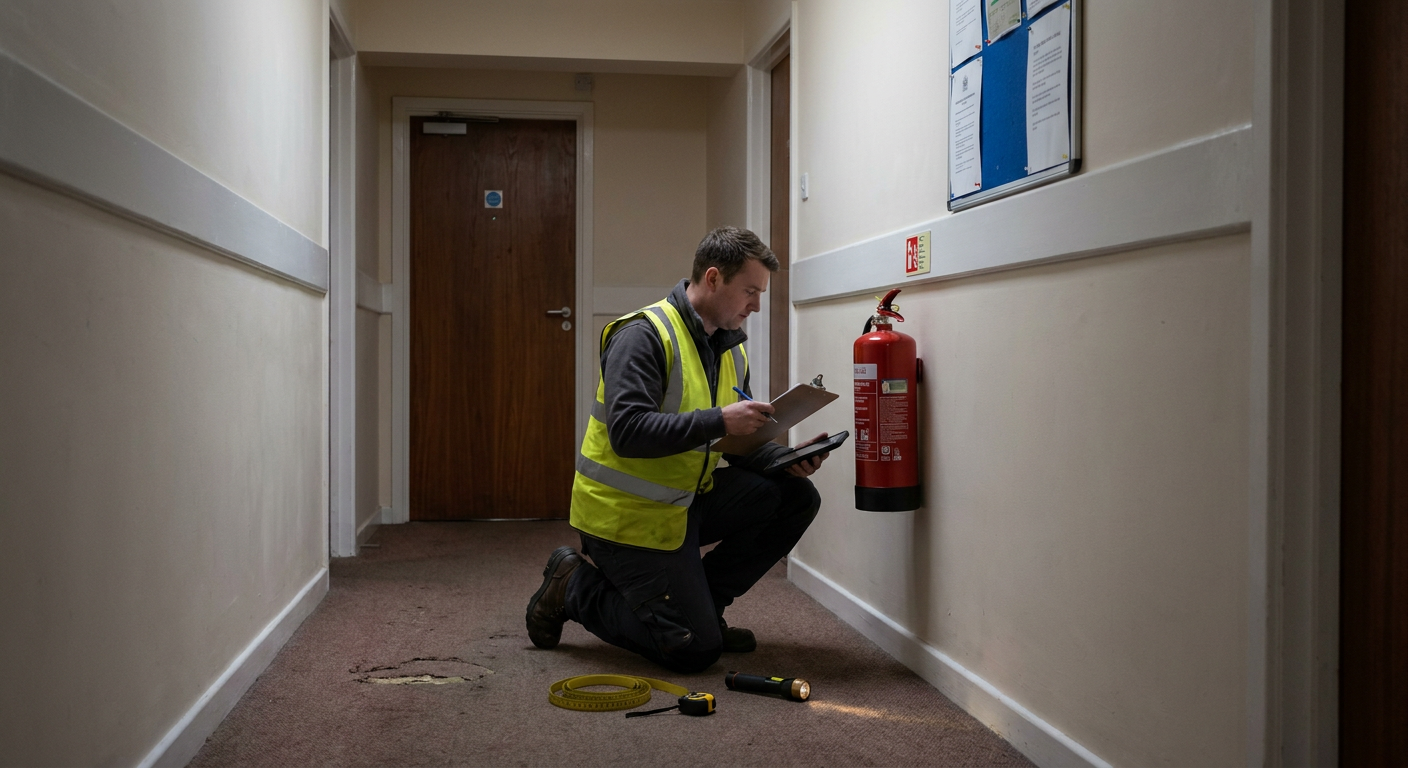
Why a care home assessment differs from a shop or office
A care home fire risk assessment Chelmsford deals with people who cannot leave a building quickly on their own. In a shop or office, everyone is expected to walk out through the nearest exit when the alarm sounds. Residents in a care setting often use wheelchairs, walking frames or hoists, and some may be bedbound. So the specialist firm looks at how long it takes staff to move each person, rather than assuming a fast exit.
The assessment also has to account for the fact that residents live here. They cook, sleep and spend every hour of the day inside the building. This means fire loads are higher, ignition sources are more varied, and the sleeping risk fire assessment portion carries far more weight than it would in a workplace. The specialist checks whether the layout allows staff to reach every resident before smoke spreads into corridors.
Residential home fire safety Chelmsford follows the same principles as any other Essex town, but local building stock matters. Older converted houses used for supported living fire safety Essex often have narrower hallways and fewer escape routes than purpose-built homes. The specialist factors in these physical limits when judging whether the current plan works.
Progressive horizontal evacuation for immobile residents
When residents cannot use stairs unaided, moving them down and out is slow and sometimes dangerous. Progressive horizontal evacuation solves this by moving people sideways, through fire-resistant doors, into an adjoining compartment on the same floor. That compartment becomes a temporary place of safety while the fire service arrives or the situation is brought under control.
In practice, the specialist firm examines the building to confirm these compartments actually exist. A corridor with ordinary doors does not count. The walls, floors and doors between one zone and the next must resist fire and smoke for a set period, usually thirty or sixty minutes. If someone has altered the building, added pipework or left gaps around cables, that resistance may be gone.
An evacuation plan for immobile residents relies entirely on this compartmentation holding. Staff need to know which door leads to which safe zone, and the route must stay clear of wheelchairs, laundry trolleys and furniture. The specialist checks that signage matches the actual layout, because plans drawn up years ago often do not reflect recent changes to room use or corridor widths.
Personal emergency evacuation plans for every resident
Every person who cannot evacuate independently needs a personal emergency evacuation plan. These PEEPs for care home residents set out exactly how that individual will be moved, who will move them, and what equipment is required. A resident who can walk slowly with a frame needs a different plan from one who requires a ceiling hoist.
Short-stay respite residents are included. If someone stays for even one night, the home must know how to get them out safely. The specialist firm reviews whether the admission process captures mobility information before the person arrives, so a plan is ready on day one rather than drafted after a fire alarm goes off.
These plans sit alongside the broader fire strategy for the building. They must be kept where night staff can read them without searching through filing cabinets. The specialist checks that they are updated when a resident's condition changes, since a fall or illness can alter someone's mobility overnight. Outdated PEEPs give a false sense of security.
Night staffing levels and moving residents to safety
Night shifts run with fewer staff, yet the risk is often higher because residents are asleep, doors may be closed, and alarms take longer to prompt action. Inspectors judge night staffing by working out how many people are on duty and how long it would take them to move every resident to a place of safety using the progressive horizontal method.
If three carers are on shift and twenty residents need moving, the maths has to work within the time the compartment walls can hold back smoke. The specialist firm calculates these timelines during the visit. Night staff fire evacuation care home procedures are tested against real numbers, not assumptions.
The assessment also looks at call systems, staff training records and whether the night team knows the building well enough to act without hesitation. A new agency worker unfamiliar with the layout slows everything down. The specialist notes these gaps so the responsible person can address them through better handovers or mandatory induction steps before anyone works a night shift alone.
Bedroom doors, compartment walls and sleeping risk
The sleeping risk fire assessment forms a distinct part of the visit because people are most vulnerable when unconscious. Bedroom doors in a care home must resist fire long enough for staff to reach the occupant. The specialist firm checks their rating, their self-closing devices and the gaps around the edges. A door that slams shut but leaves a two-centimetre gap at the bottom will let smoke through almost immediately.
Compartment walls separating bedrooms from corridors and adjacent rooms receive the same scrutiny. Any penetration for heating pipes, electrical trunking or ventilation ducts must be sealed with the correct material. The specialist looks above ceiling tiles and inside service risers where poor sealing is common and hard for staff to spot.
This detailed inspection often leads to recommendations for a separate fire door inspection or a full compartmentation survey if the initial findings suggest widespread faults. Both tasks are carried out by specialist firms who report back to the responsible person with exact locations and remedial steps needed to restore the building's fire resistance.
How much of the visit disturbs residents
The specialist firm plans the visit to cause as little disruption as possible. Much of the work involves examining communal areas, plant rooms, corridors, stairwells and external escape routes. These spaces can be checked without entering any bedroom or waking a resting resident.
When bedroom doors and internal layouts do need inspecting, the specialist coordinates with the care manager to find times when rooms are empty or residents are in communal lounges. No one enters a room unannounced. The goal is to gather accurate information about fire risks without causing anxiety to people who rely on routine and calm surroundings.
Staff interviews happen quietly in offices or break rooms. The specialist asks about drill frequency, alarm testing, equipment locations and how confident the team feels carrying out the evacuation plan. These conversations reveal problems that a physical walkthrough alone might miss, such as a fire exit that staff routinely prop open for convenience or a call bell system that does not reach the furthest bedroom.
CQC inspections and the fire risk assessment document
The Care Quality Commission expects to see a current fire risk assessment during any inspection. It forms part of the evidence that the home is safe and well managed. If the document is missing, out of date or fails to address the specific risks of the residents living there, CQC will raise it as a concern.
The specialist firm produces a written report that meets regulatory expectations. It records hazards, identifies who is at risk, evaluates existing precautions and sets out an action plan with realistic deadlines. The responsible person keeps this document available for inspectors, residents' families and local authority safeguarding teams.
Homes across Chelmsford and the wider Essex area operate under the same legal framework, but CQC inspectors apply it strictly to care settings because of the vulnerability involved. A generic template downloaded from the internet will not satisfy them. The assessment must reflect the actual building, the actual residents and the actual staffing arrangements in place on the day it was written.
Supported living houses and fire safety requirements
A small supported living house is not a registered care home, but the law still requires a fire risk assessment. The Fire Safety Order applies to any premises where people sleep away from their own home, including supported accommodation arranged by local authorities or housing associations.
The difference lies in scale and complexity. A four-bedroom house supporting adults with learning disabilities has fewer residents and usually fewer staff than a forty-bed nursing home. But the core questions remain: can everyone get out safely, are the doors adequate, and do the staff know what to do at three in the morning?
Supported living fire safety Essex follows the same standards as larger homes, adjusted for the building type. The specialist firm assesses the actual layout, the mobility of the people living there and the support hours provided. Some supported living arrangements have no waking night staff, which changes the evacuation strategy entirely. The assessment must account for this reality rather than assuming help is always present.
Related fire safety services
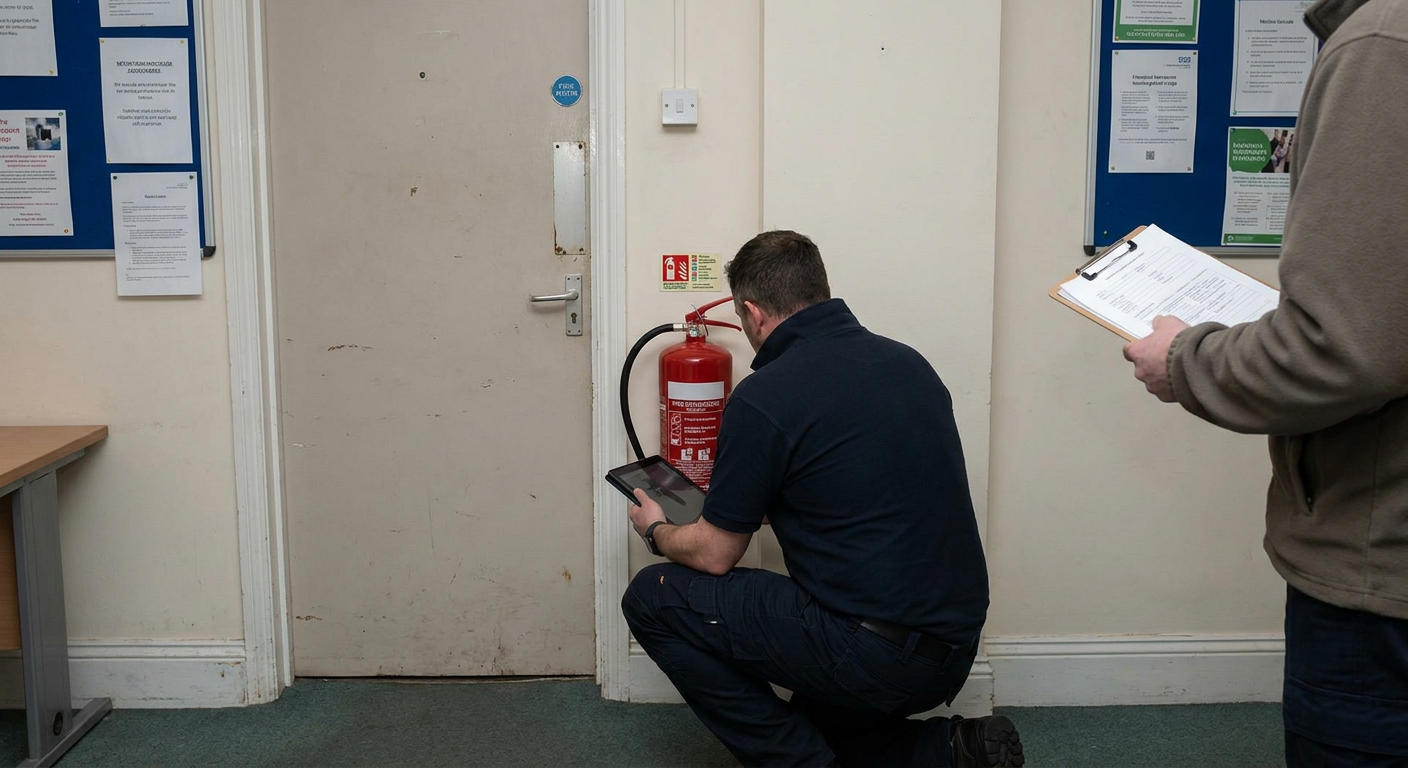
A care home fire risk assessment in Chelmsford involves more than checking exits. The specialist firm examines how residents sleep, move and evacuate with the staff available at night.
Fire Risk Assessment
The starting point for any care home or supported living house.
Fire Door Inspection
Checks on bedroom and corridor doors that protect sleeping residents.
Compartmentation Survey
Verifies walls and floors between zones resist fire and smoke.
Fire Evacuation Plans
Written routes and drills tailored to residents with limited mobility.
Fire Strategy
Overall approach for older conversions and purpose-built homes.
Awareness Training
Ensures care staff understand alarms, doors and escape routes.
Questions about care home assessments
Common things managers and owners ask before booking a visit for their home.
- Difference from an office assessment
- Care homes involve sleeping residents who cannot self-evacuate. The specialist focuses on staff response times, compartmentation and PEEPs rather than simple exit routes.
- Horizontal evacuation in practice
- This keeps them away from stairs until Essex Fire and Rescue arrives or the danger passes. The approach suits homes where many people cannot use stairs unaided.
- PEEPs for short-stay residents
- Yes. Anyone staying overnight needs a plan based on their mobility, even for a single respite night. Admission processes should capture this before arrival.
- Judging night staffing levels
- The specialist calculates how long the available night staff take to move all residents to a safe zone and compares that against the fire resistance of the building.
- CQC and the assessment
- CQC expects to see a current, site-specific assessment. A missing or generic document will be raised as a regulatory concern during inspection.
- Supported living requirements
- The Fire Safety Order applies to supported living houses too. The specialist adjusts the assessment for the smaller scale and any absence of waking night staff.
Enquire about your care home in Chelmsford
Send the details of your home and a specialist firm will respond with what they can do. Asking costs nothing and does not commit you to booking a visit.
- No obligation
- Free to enquire
- Local specialists