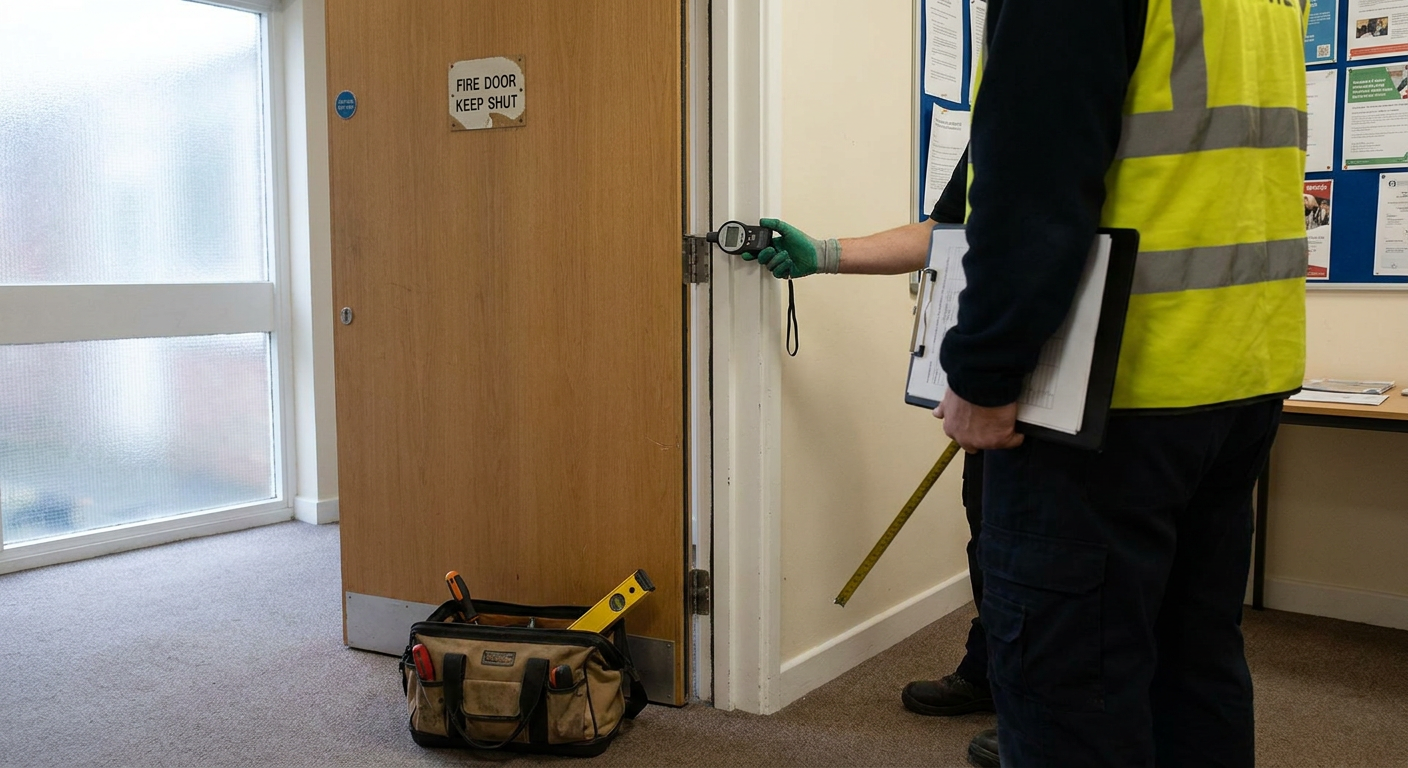
Fire door inspection in Writtle
Send the details of your building to find out what a fire door check in Writtle flats involves. There is no charge for the initial enquiry, so you can decide if it suits before anything is arranged.
Writtle buildings covered for fire door inspection
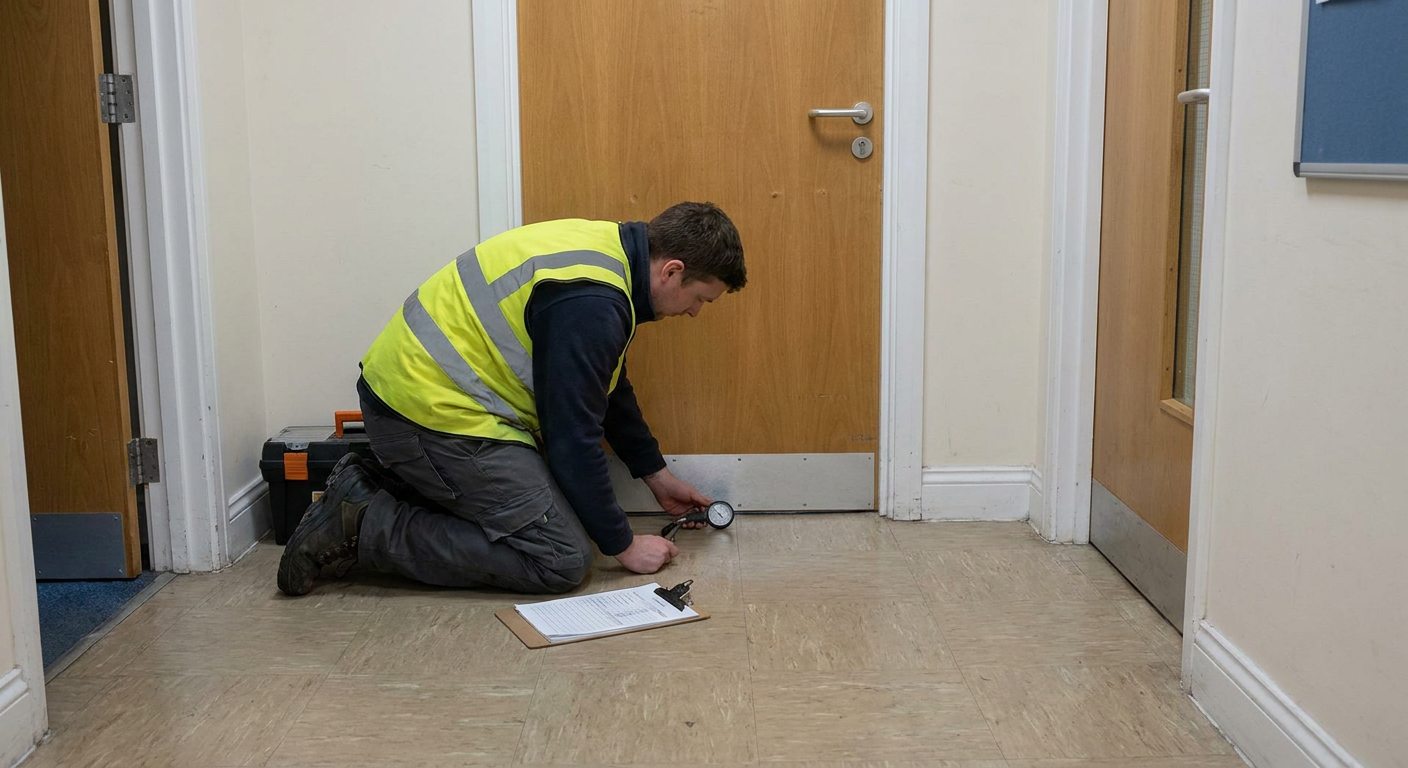
A specialist firm handles fire door inspection in Writtle for converted houses, purpose-built flats and shared halls. Enquiries are taken here and passed to the firm carrying out communal door inspection across Essex.
- Pre-regulation housing stock
- Over half the homes were built between 1919 and 1982, meaning many flat entrance doors predate modern fire safety standards.
- Converted older buildings
- Houses divided into flats often retain original timber doors that lack the certification required for current compliance.
- Timber-framed properties
- Timber-framed medieval homes in the historic core often lack modern compartmentation, so a fire risk assessment may identify gaps around doors and walls that need specialist attention.
Flat entrance doors or communal hall doors
Both types sit on the escape route but carry different duties under fire safety law. The right approach depends on the building layout.
Purpose
- Flat entrance doors
- Stops fire spreading from a flat into the shared hallway.
- Communal hall doors
- Protects the stairwell or final exit route from smoke and flame.
Responsibility
- Flat entrance doors
- Usually falls to the individual leaseholder or tenant.
- Communal hall doors
- Falls to the freeholder, managing agent or responsible person.
Common faults
- Flat entrance doors
- Missing intumescent strips, painted-over hinges, broken self-closers.
- Communal hall doors
- Propped open, damaged glazing, gaps around the frame edges.
Inspection focus
- Flat entrance doors
- Checks flat entrance door compliance against current standards.
- Communal hall doors
- Checks the whole escape route as part of a wider assessment.
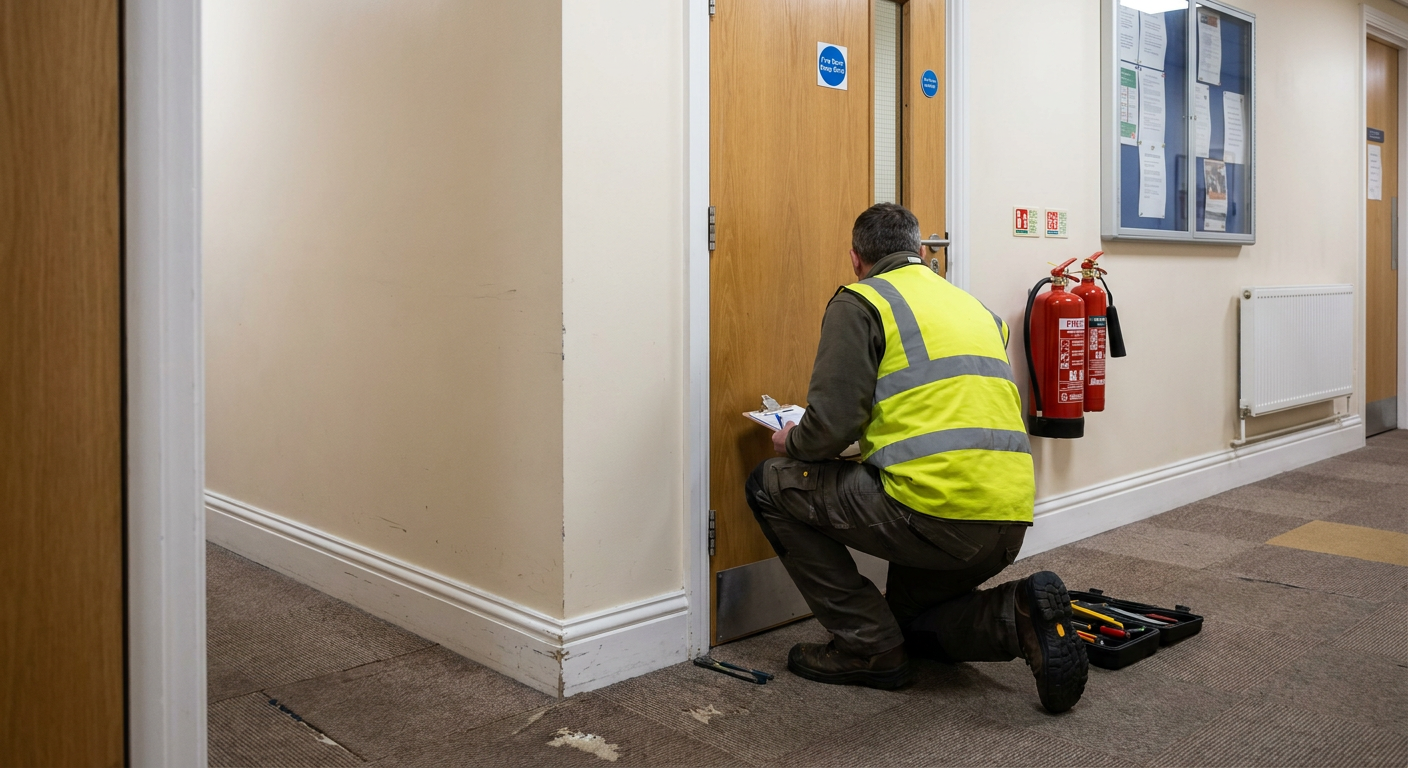
A specialist advises which doors need attention after examining the building layout and its fire strategy.
What the signs on your doors might mean
A heavy wooden door can look solid without offering any real fire resistance. Age, paint layers and replaced hardware all change how a door behaves in a fire, so visual clues only go so far.
- The door feels light and hollow when knocked
- A specialist checks the core material and thickness to establish whether it meets flat entrance door compliance standards.
- No visible seals around the frame edges
- Intumescent strips expand in heat to block smoke. Their absence suggests the door was never upgraded. An inspection confirms what is needed.
- The door does not close fully by itself
- A faulty closer leaves a gap that lets smoke through. The specialist tests the closing speed and latching action to see if adjustment is enough.
- Large gaps at the top or sides
- Gaps beyond a few millimetres defeat the purpose of a fire door. Measuring them precisely determines whether the frame needs packing or replacing.
Recognising your situation and when to act
The point is how soon to ask, because only an inspection settles what a door actually is. Old converted building fire doors rarely carry markings, so guessing from appearance alone leaves doubt unresolved.
-
My Writtle block was converted from an old house. Are the flat doors proper fire doors?Soon
Conversions frequently retain original domestic doors that lack fire rating. Without certification labels or test evidence, they probably do not meet current requirements.
What to do Arrange an inspection so the specialist can identify each door type.
-
How do I tell if the doors in our shared hall are original 1970s doors or compliant ones?Soon
A specialist examines each door leaf, frame, hinge, closer and seal in a shared building to confirm it resists fire and smoke long enough for residents to escape safely.
What to do Ask who inspects fire doors in blocks to examine the cores and hardware.
-
How often should flat entrance doors and communal doors in Writtle be inspected?Worth watching
Regulations set minimum frequencies depending on building height and use. Multi-storey blocks require more frequent checks than low-rise conversions.
What to do Check the guidance on review intervals for your specific building type.
-
Can you inspect the doors without needing access to every flat?Worth watching
Communal doors are accessible from shared areas, but flat entrance doors require entry to each dwelling to check both faces and the closing mechanism.
What to do Coordinate with residents beforehand so the specialist can complete the full survey.
-
If a door fails, can it be adjusted or does the whole set need replacing?Today
Minor faults like loose hinges or worn seals can sometimes be remedied. A door lacking the correct core construction or rating cannot be fixed by adjustment alone.
What to do Let the specialist report state whether repair or replacement is appropriate.
-
Do we need to send the inspection record to our insurer or managing agent?Worth watching
Managing agents typically require the report to demonstrate compliance. Insurers may request it following a claim or as a condition of cover renewal.
What to do Keep the written record available and share it when requested by either party.
None of this diagnoses a particular home. If a door is suddenly sticking, dropping off its hinges or showing scorch marks, ask about it now.
Ask about your doors in Writtle
Send a description of your building and the doors you are unsure about. The enquiry goes to a specialist firm that carries out fire door inspections locally, and it does not commit you to booking anything.
- No obligation
- Free initial enquiry
- Local specialists