
Writtle workplaces
Fire warden training in Writtle workplaces
Send an enquiry about fire warden training in Writtle and find out what the course covers for your staff. There is no charge to ask, and no obligation to book anything.
Who should know what to do if a fire starts?
Employers around Writtle need people who can act calmly when an alarm sounds. Without trained wardens, staff hesitate and exits get blocked. These signs suggest a workplace needs someone prepared.
- 1
No named person at the alarm panel
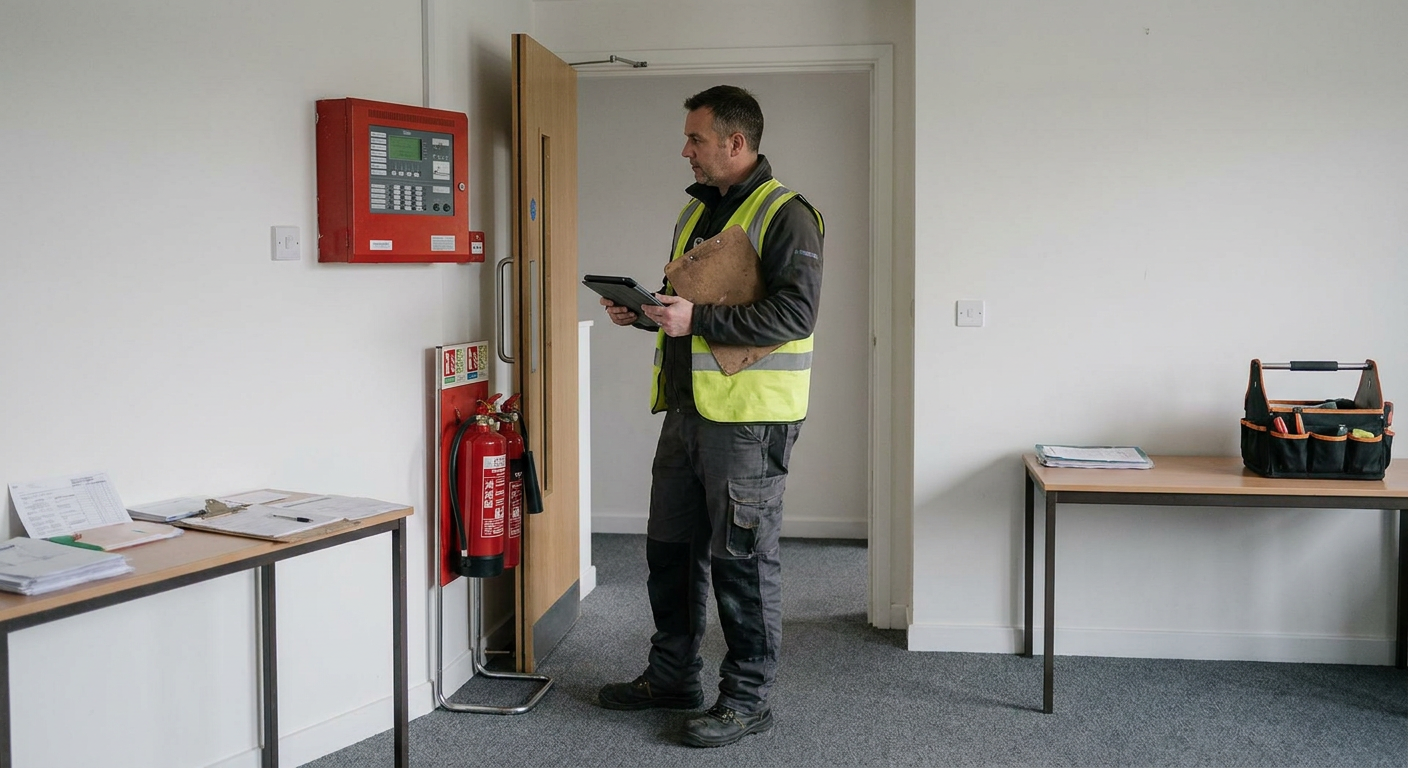
When the bell rings, nobody moves toward the panel or checks the zone indicator because no one has been assigned that job.
- 2
Blocked routes during busy periods
Boxes, deliveries or chairs drift into corridors over the day, narrowing the path staff would use to leave quickly.

- 3
Staff unsure of their assembly point
People look at each other rather than moving to a set spot outside, which suggests they have not practised the route.

On-site sessions or a training venue in Essex
The setting changes how much time staff spend away from their desks and how closely the drills match the actual building.

Familiarity with exits
- At your Writtle workplace
- Staff walk the actual escape routes they use every working day.
- At a training centre
- Routes are taught using generic floor plans and example layouts.
Time away from work
- At your Writtle workplace
- Sessions fit around shifts so fewer people are off the floor at once.
- At a training centre
- Travel to a venue adds time before and after the classroom hours.
Practical extinguisher use
- At your Writtle workplace
- Demonstrations happen in the car park or yard where staff work.
- At a training centre
- Practice takes place in a designated outdoor area at the centre.
Drill relevance
- At your Writtle workplace
- The trainer sees the real obstacles, like narrow stairs or heavy doors.
- At a training centre
- Drills follow a standard script rather than the specific building layout.
A specialist advises which format suits the premises after looking at the building and shift patterns.
What different gaps in readiness look like
The same quiet alarm or crowded corridor can mean different things depending on the building. Knowing what to look for helps decide who needs training and where.
- Alarm sounds but nobody checks the panel
- This usually points to unclear fire warden duties in a UK workplace. A session on roles would settle who responds first.
- Extinguishers sit behind stacked boxes
- Blocked escape routes or equipment usually points to staff not knowing what to keep clear. Fire safety awareness training covers the basics so everyone understands their daily responsibilities around the building.
- New starters miss the induction briefing
- When new hires have not been told what to do during an alarm, it usually points to a gap in onboarding. A scheduled refresher session closes that gap and records who attended.
- Timber beams run through partition walls
- Many medieval properties in Writtle present compartmentation challenges. A compartmentation survey in Writtle identifies where fire could spread unseen.
Questions about fire warden training in Writtle
These cover what employers around the village ask before booking a fire marshal course in Writtle for their staff.
- What the session covers
- A trainer walks through fire warden duties in a UK workplace, alarm response, evacuation procedures, hazard spotting and how to direct people out safely.
- Choosing who attends
- The employer decides who can be a fire warden. Managers typically pick reliable staff present across all shifts to ensure constant cover.
- Refresher timing
- Fire warden refresher frequency depends on risk. Most specialists advise retraining every one to three years, or sooner if the building changes.
- Location of the course
- On site fire marshal training in Essex is common. The trainer comes to the Writtle workplace so staff learn the actual routes they would use.
- Practical extinguisher work
- Courses usually include handling extinguishers outdoors. Classroom theory covers fire behaviour, then staff practise aiming and discharging under supervision.
- Certificates and records
- Attendees receive individual certificates. If the fire authority asks, these documents show who completed the training and when.
Ask about training for your Writtle workplace
Send a few details about the building and the number of staff. A specialist firm will reply with what the course involves. Nothing is booked until you agree.
- No booking fee
- Enquiries answered promptly
- Local trainers